How you perceive
See the filters and preferences shaping what you notice, overlook and treat as significant.

The Identity Compass makes the patterns behind your decisions, motivation and communication visible. Understand how you currently construct your experience, then use that insight to think and respond with greater flexibility.
Most assessments describe behaviour. The Identity Compass goes beneath behaviour to explore the cognitive preferences and motivational patterns influencing it. It is not a label or a fixed personality type; it is a practical map for awareness and development.
See the filters and preferences shaping what you notice, overlook and treat as significant.
Understand the patterns influencing motivation, judgement, communication and action.
Identify where greater awareness and flexibility could expand your available responses.
Use the profile for personal development or combine individual results to understand the patterns shaping a team and its working environment.
Move beyond a generic personality label. See how you currently organise information, create motivation and respond to the demands around you.
See the collective patterns affecting collaboration, challenge, engagement and decision-making—without reducing people to a single team type.
A clear three-step process turns your responses into a profile you can understand and apply.
Answer the online Identity Compass questionnaire in your own time and from your own perspective.
Your responses are mapped across 50 Cognitive Intentions and presented in a detailed visual report.
Dr Stevens explains the important patterns and helps you identify useful next steps for your context.
Start with an individual profile and a focused expert debrief. You will leave with a clearer view of the patterns shaping how you think and practical areas to explore.
Your results are treated confidentially. Team and organisational work is scoped separately.

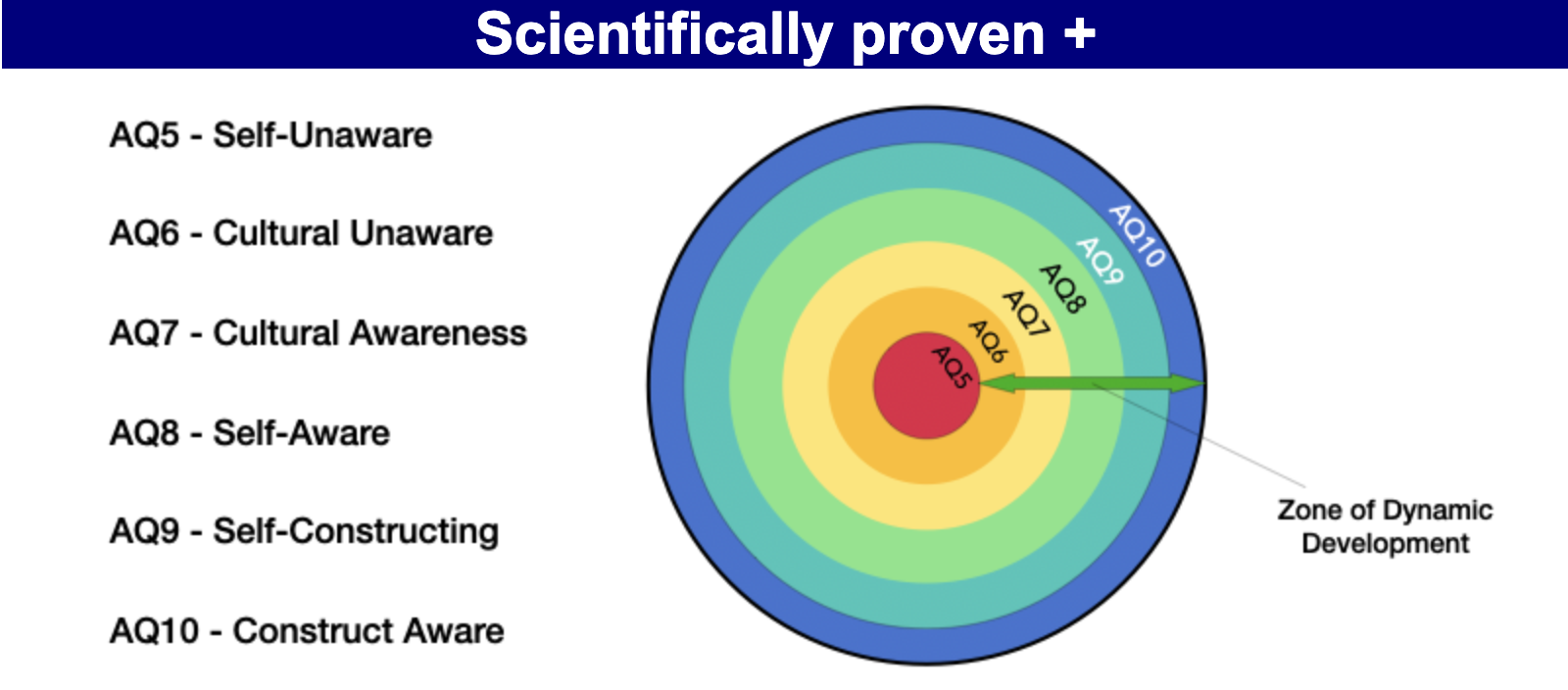
Dr Darren Stevens used Identity Compass data within his doctoral research and the development of Constructed Development Theory. Your feedback therefore connects the profile to a wider account of awareness, cognitive complexity and vertical development—not simply a list of scores.
The Job Motivation Edition can help leaders explore the conditions influencing engagement and how different people may experience the same working environment.
Influence, significance, contribution and ownership.
Recognition, development, belonging and stability.
Whether work stretches, supports or overwhelms.
Signals associated with burnout, boreout and resilience.
Where effort is productive, inert, resistant or resigned.
A profile is most useful when you know what it is—and what it is not.
It is a profiling instrument, but it does not reduce you to a fixed type. It maps current cognitive and motivational preferences that can vary in strength and can be explored developmentally.
You receive your personalised Identity Compass output and a private 30-minute feedback session with Dr Stevens. The debrief focuses on the patterns most relevant to your goals and context.
Individual results are treated confidentially. For team work, the way individual and collective information will be used is agreed in advance.
Yes. Identity Compass can support individual, role and team-level work. Organisational projects are designed around team size, purpose and the decisions the organisation needs to inform.
Darren will confirm whether an individual or team profile is the right fit, explain the next steps and arrange access to the questionnaire and feedback session.
Book your individual profile or start a conversation about applying Identity Compass across a team.